Rebone Organizm'os
 01 / OPEN ANATOMY
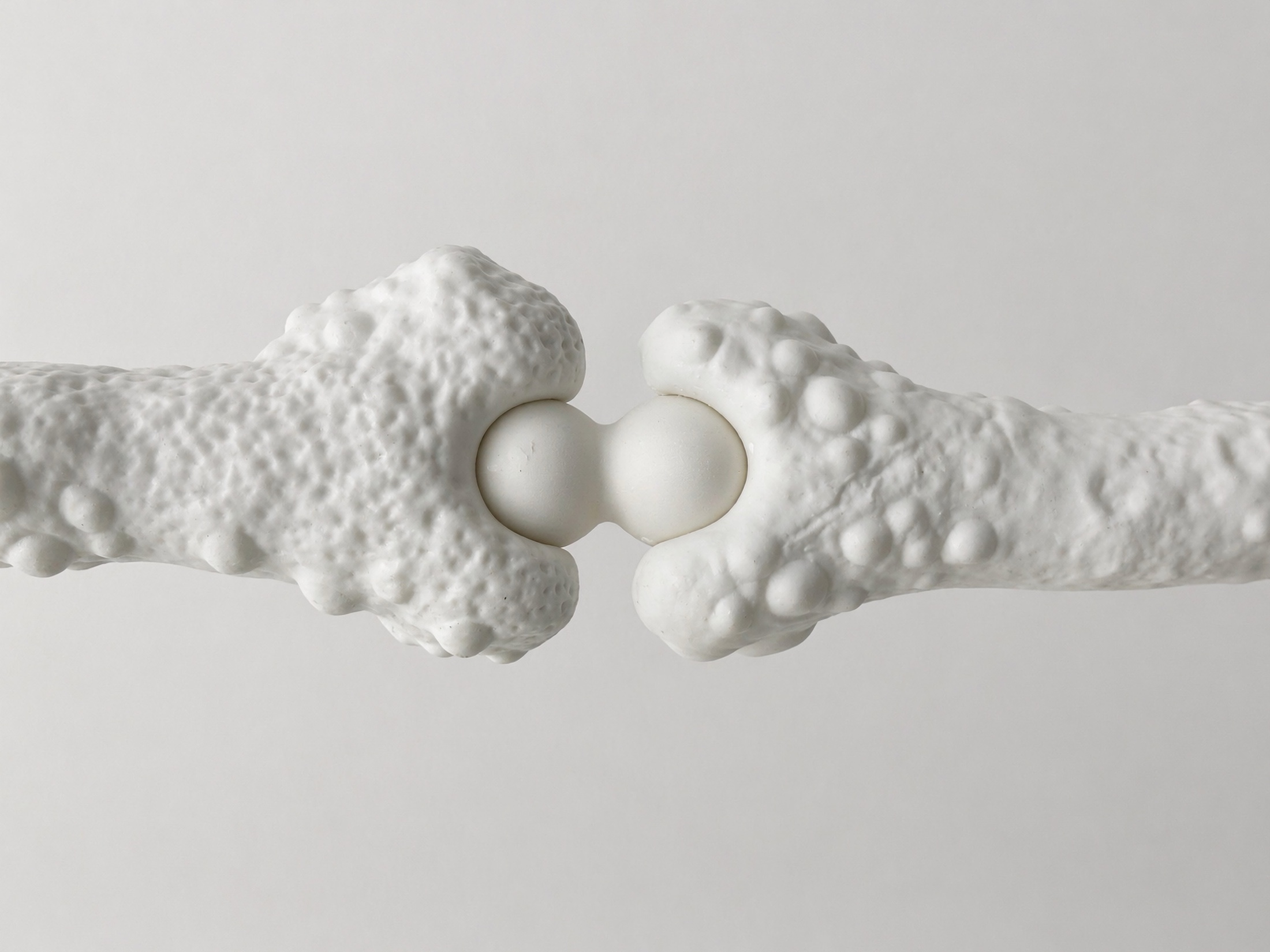
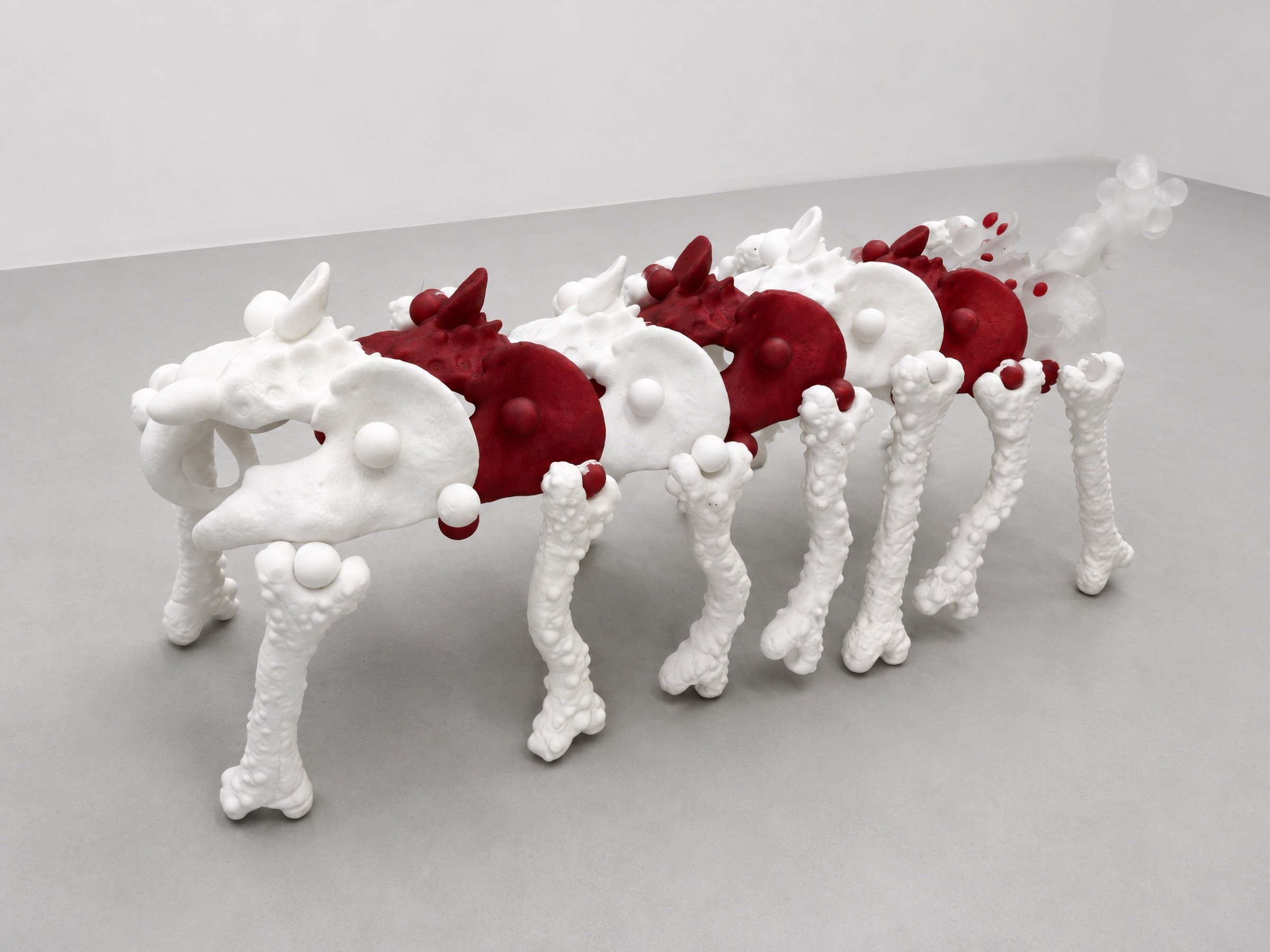
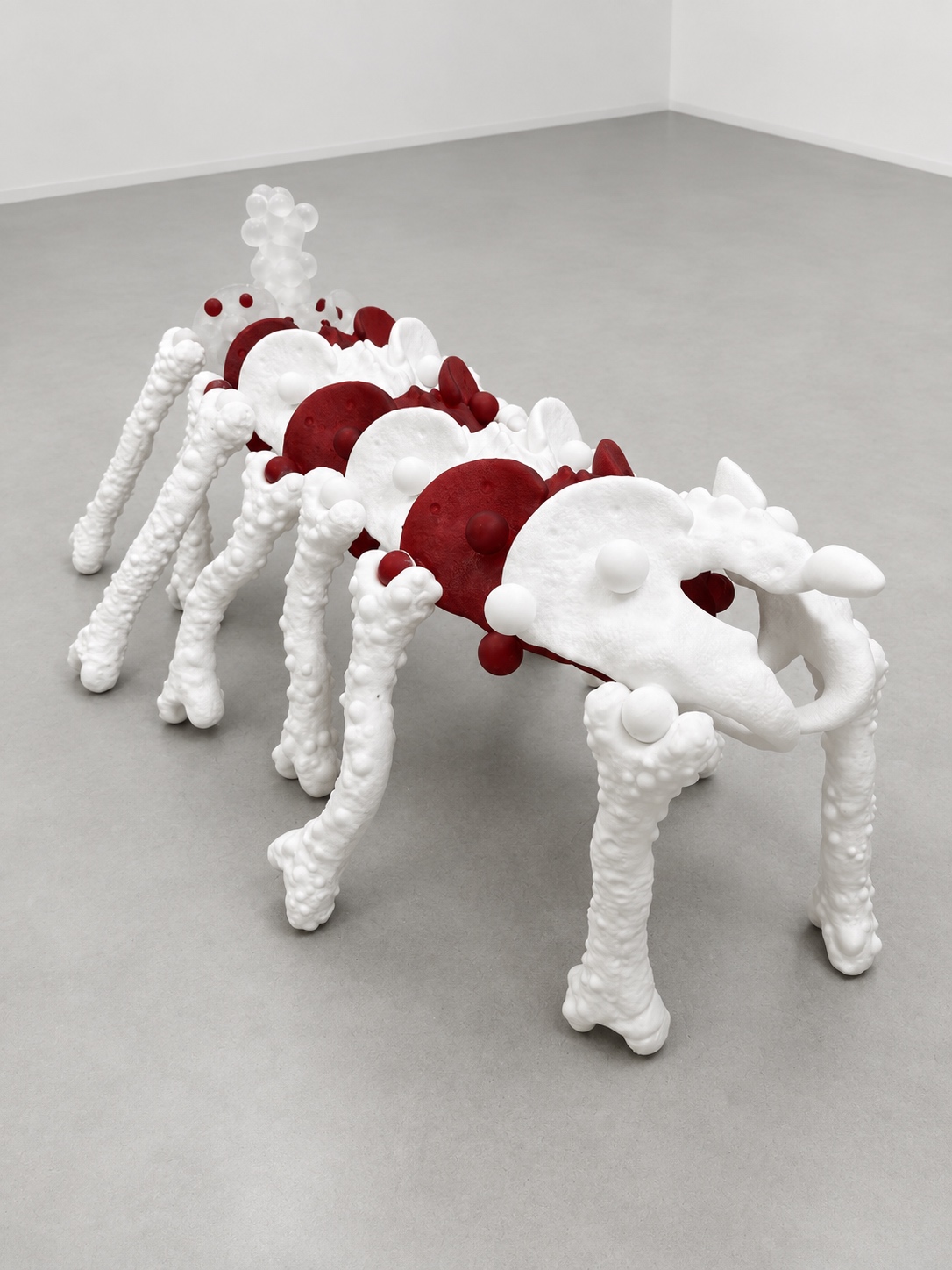
Rebone Organizm'os is a participatory sculptural practice, construction game, and modular system made from bones, organs, viruses, joints, and abstract body fragments.
Modular installation
Finished by hand
Resin printing
Each assembly is temporary
Artist identity
Ottone Radavi is a Paris-based visual artist working across sculpture, installation, and participatory systems. From 2010 to 2022, he founded and directed VARENЪYE Organizm, an interdisciplinary collective of up to twenty-two artists, engineers, architects, musicians, programmers, and researchers. Its projects were presented in museums, festivals, galleries, and public spaces in Russia, elsewhere in Europe, the United States, and the Middle East. Rebone Organizm'os is his current independent project.
Project text
Rebone Organizm'os is a participatory sculptural practice, construction game, and modular system made from bones, organs, viruses, joints, and abstract body fragments.
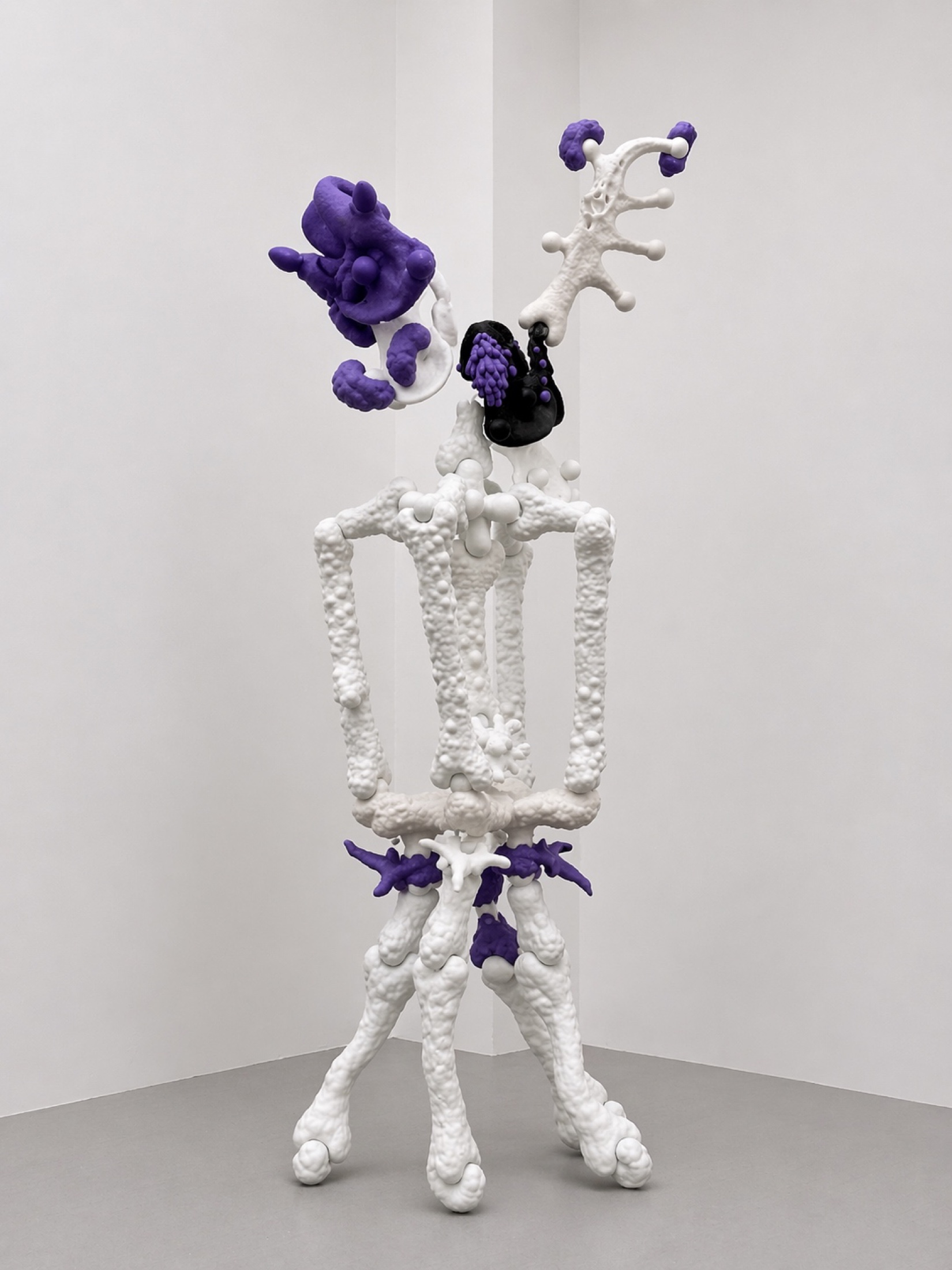
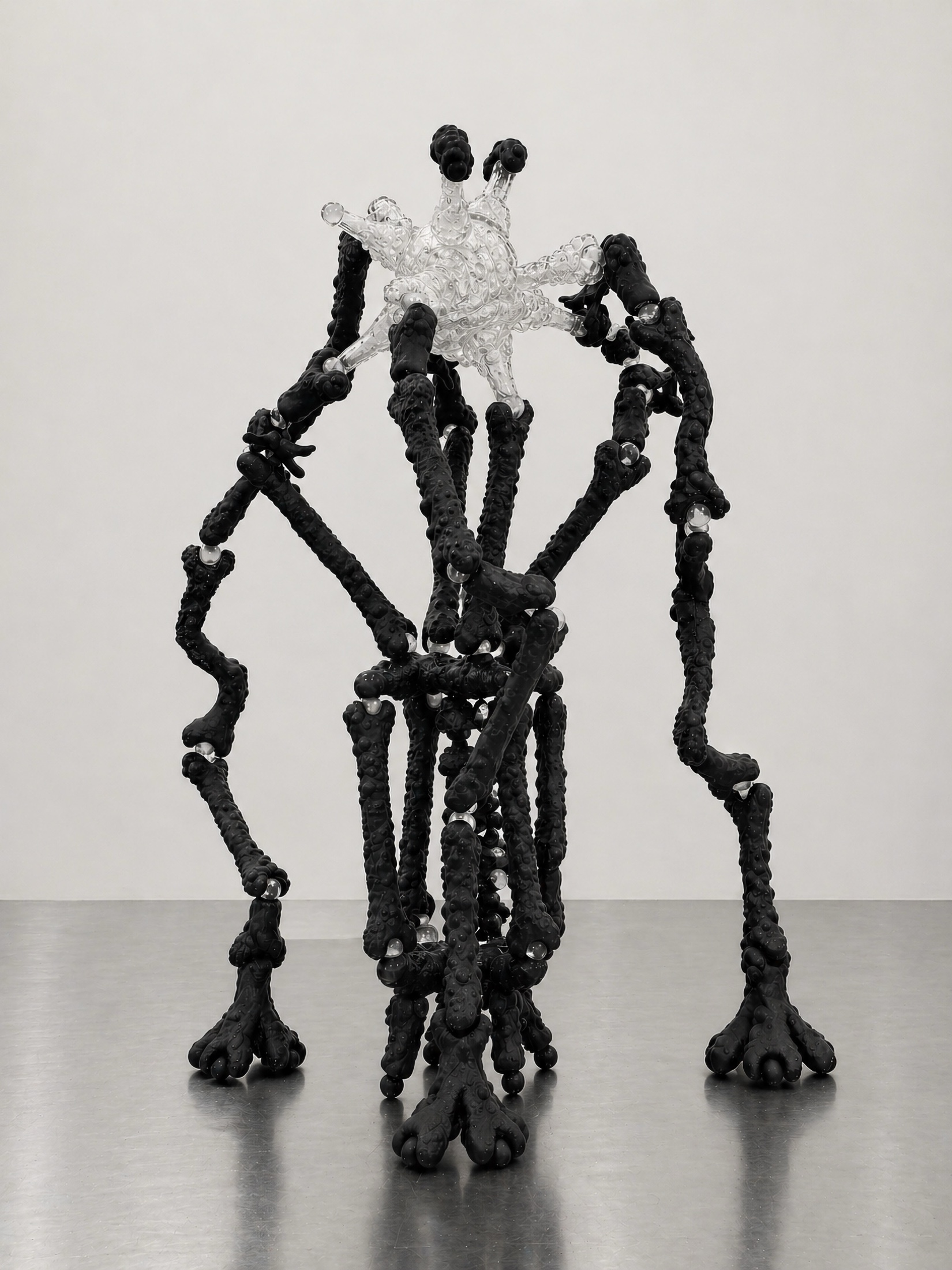
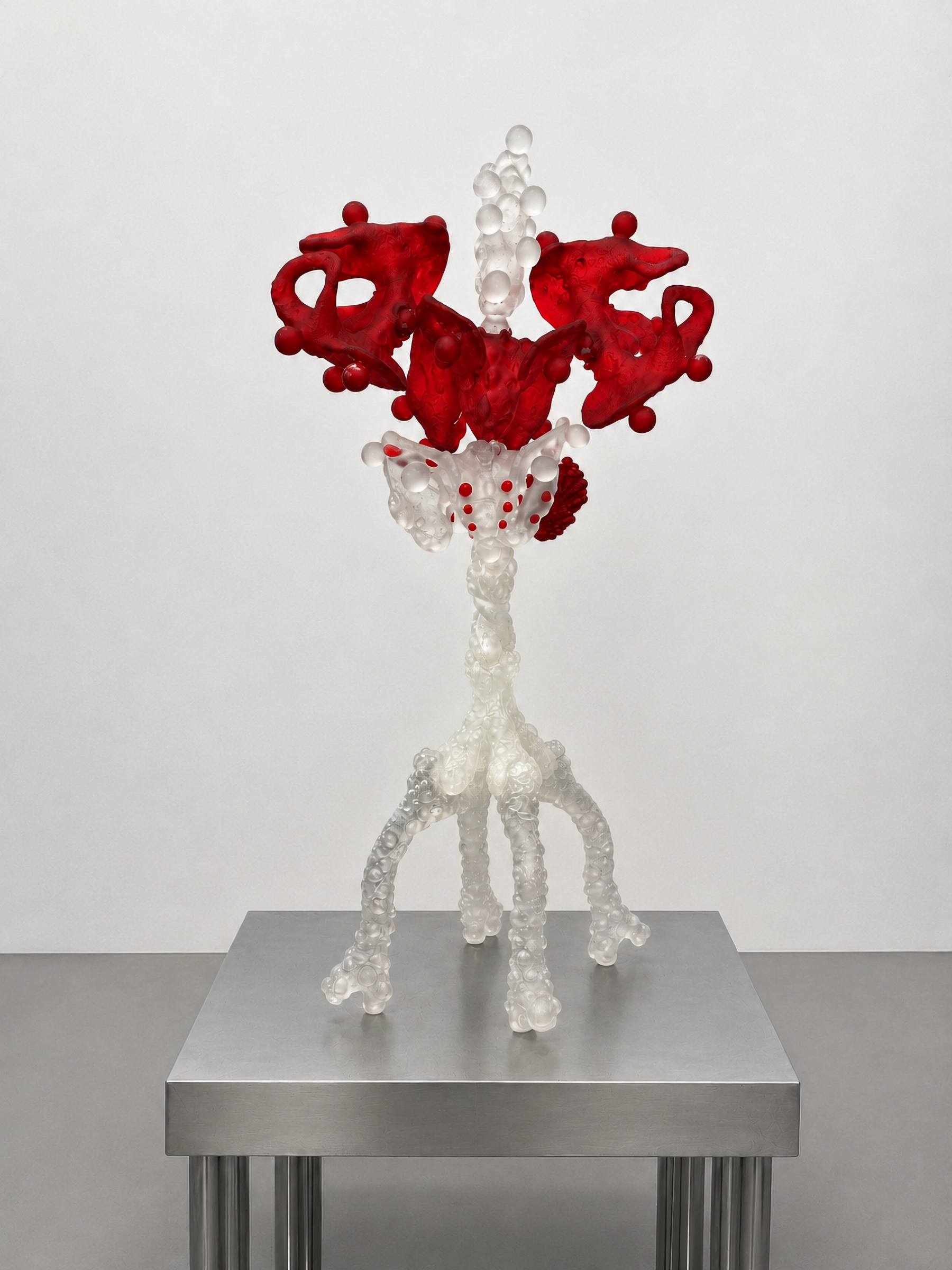
Each element is digitally sculpted, resin 3D printed, and joined through a shared spherical connector, so the work never settles into one final form. It can become a skeleton, a temporary creature, a prosthetic structure, a wearable object, or a spatial composition.
Body as system
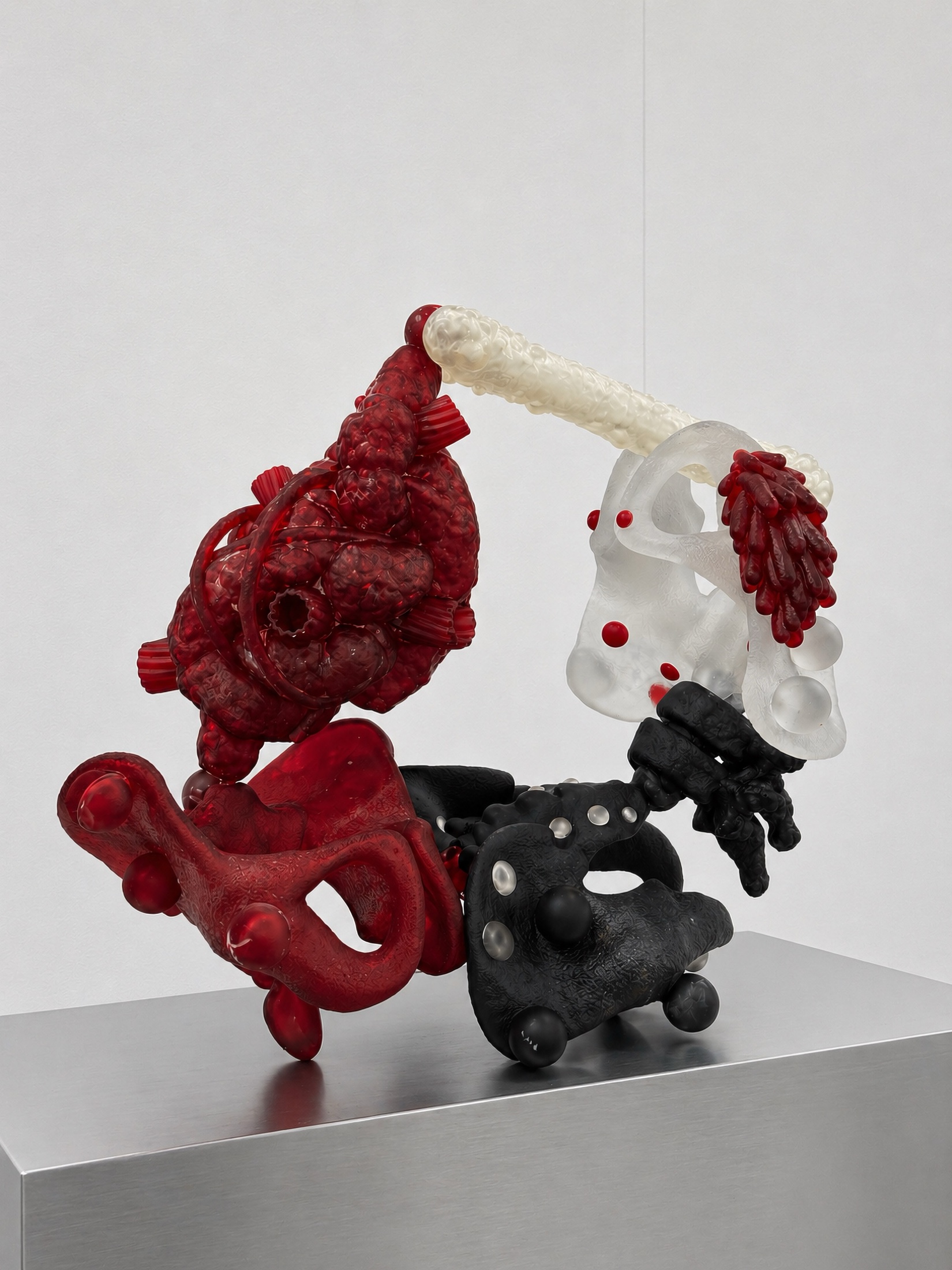
The project starts from a body that has already been taken apart. Its parts are recognizable, but they refuse anatomical obedience: pelvises become masks, bones become handles, organs become hinges, and viruses become decorative or structural agents.
Rebone Organizm'os treats the body as an open grammar, where injury, repair, mutation, and play can be composed with the same set of parts.

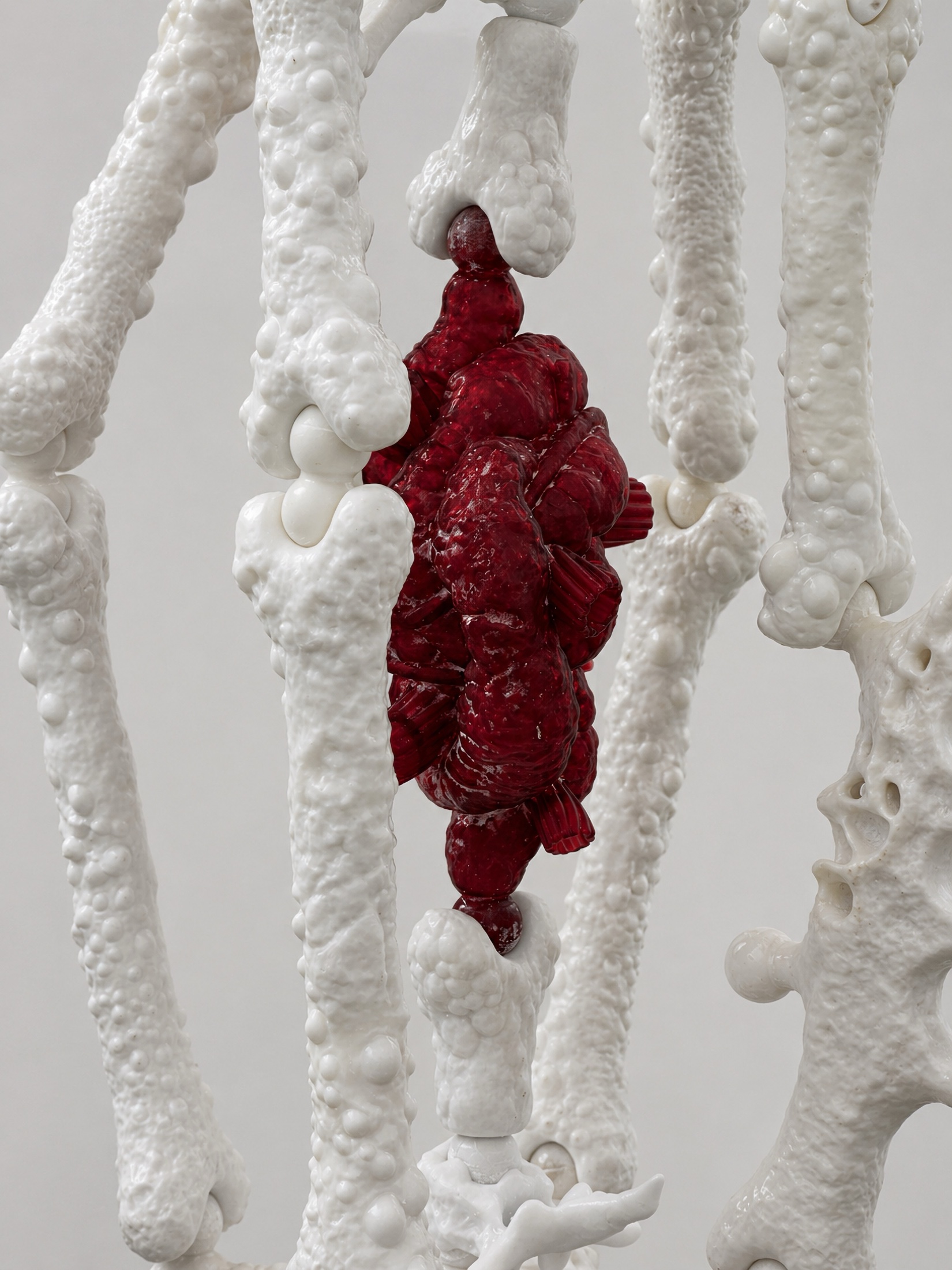


The skeleton is less a symbol of death than a building site.
Pop Up Gallery
Paris
Participation
Visitors are not only looking at the work; they physically negotiate it. Every assembly is a temporary agreement between hands, balance, weight, desire, and the limits of the connector.
This turns authorship into a shared action: the artist provides the anatomy and the rules of attachment, while each participant tests what kind of organism can exist for a few minutes before it changes again.

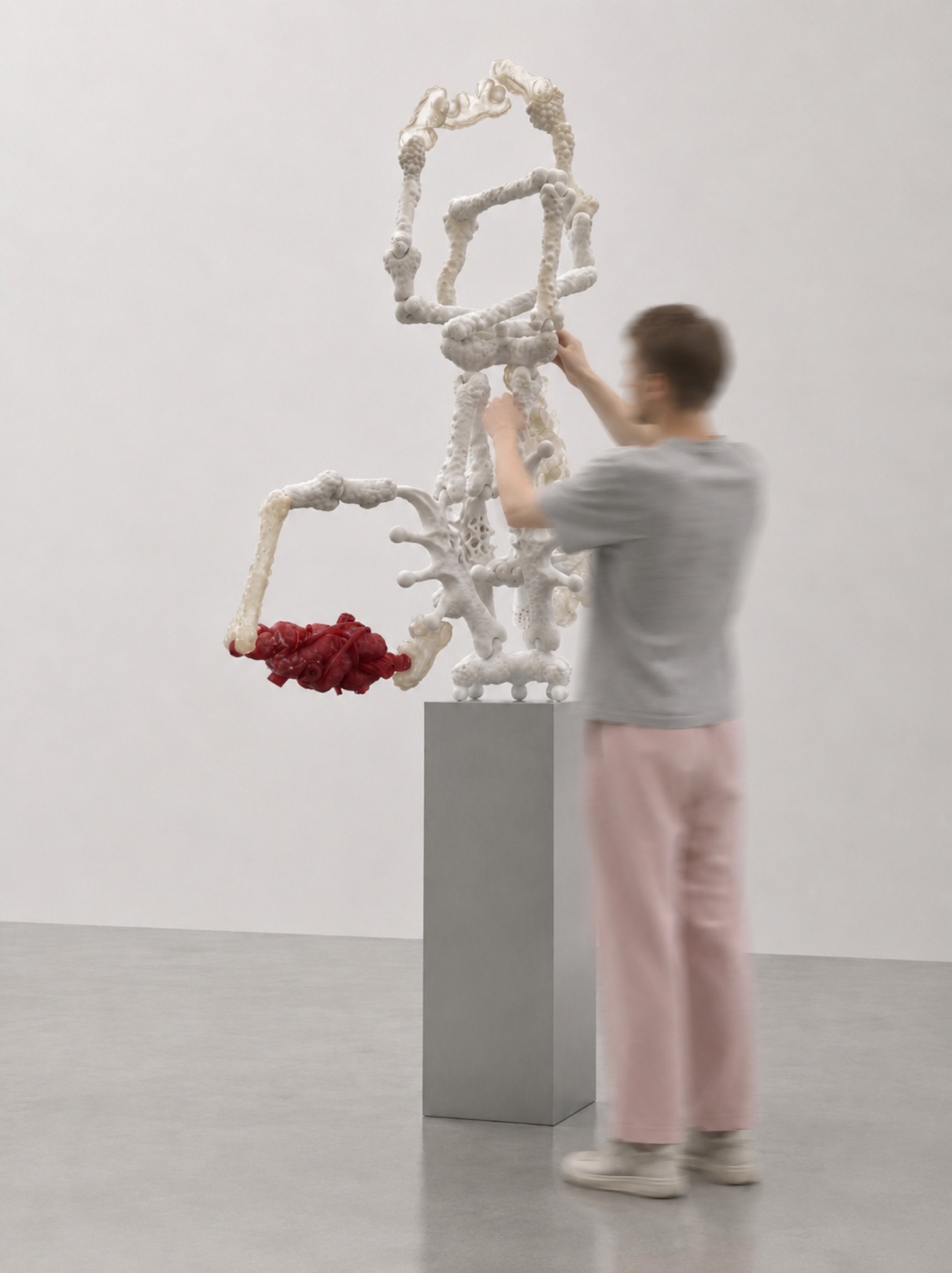
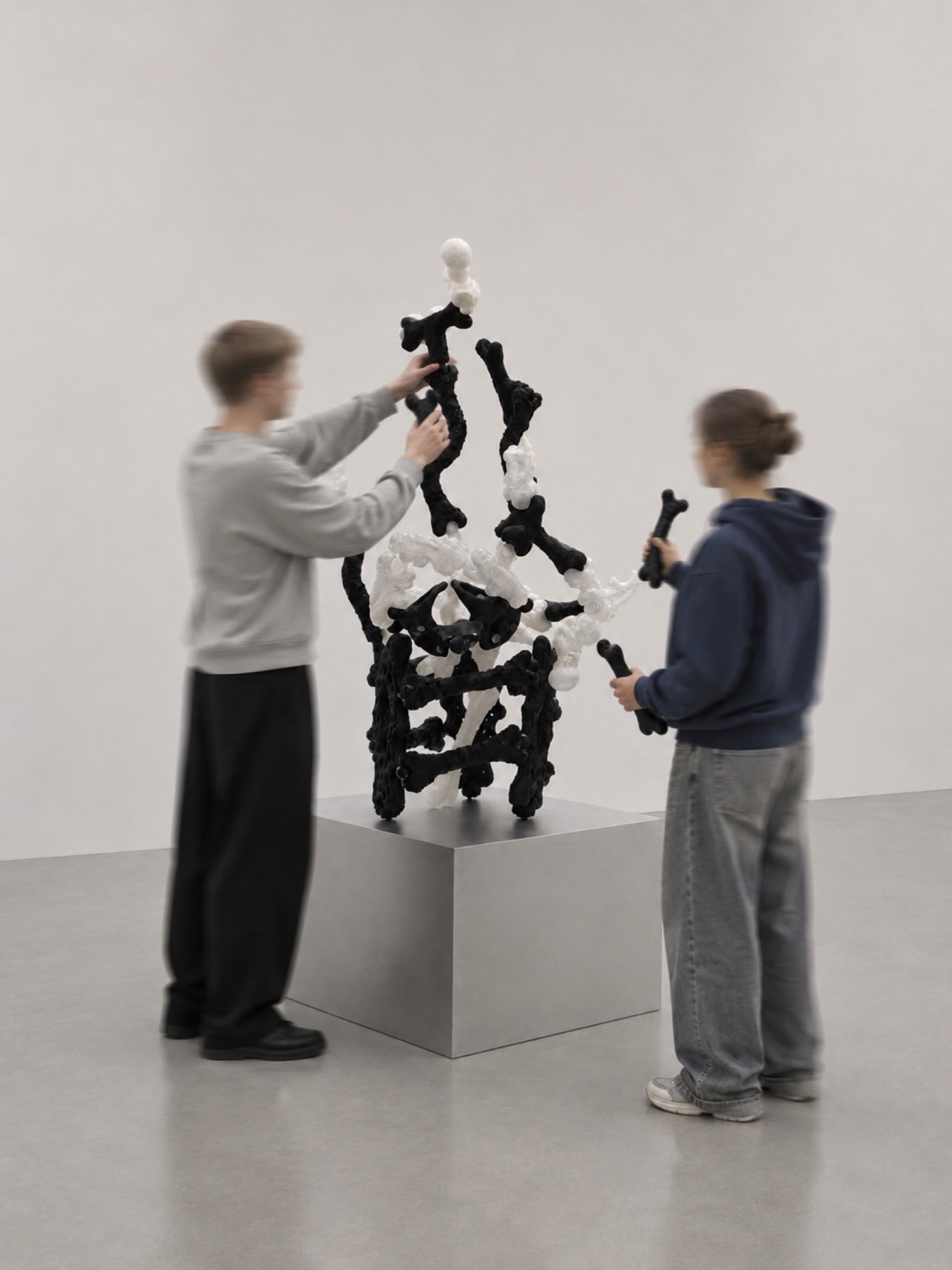


Material logic
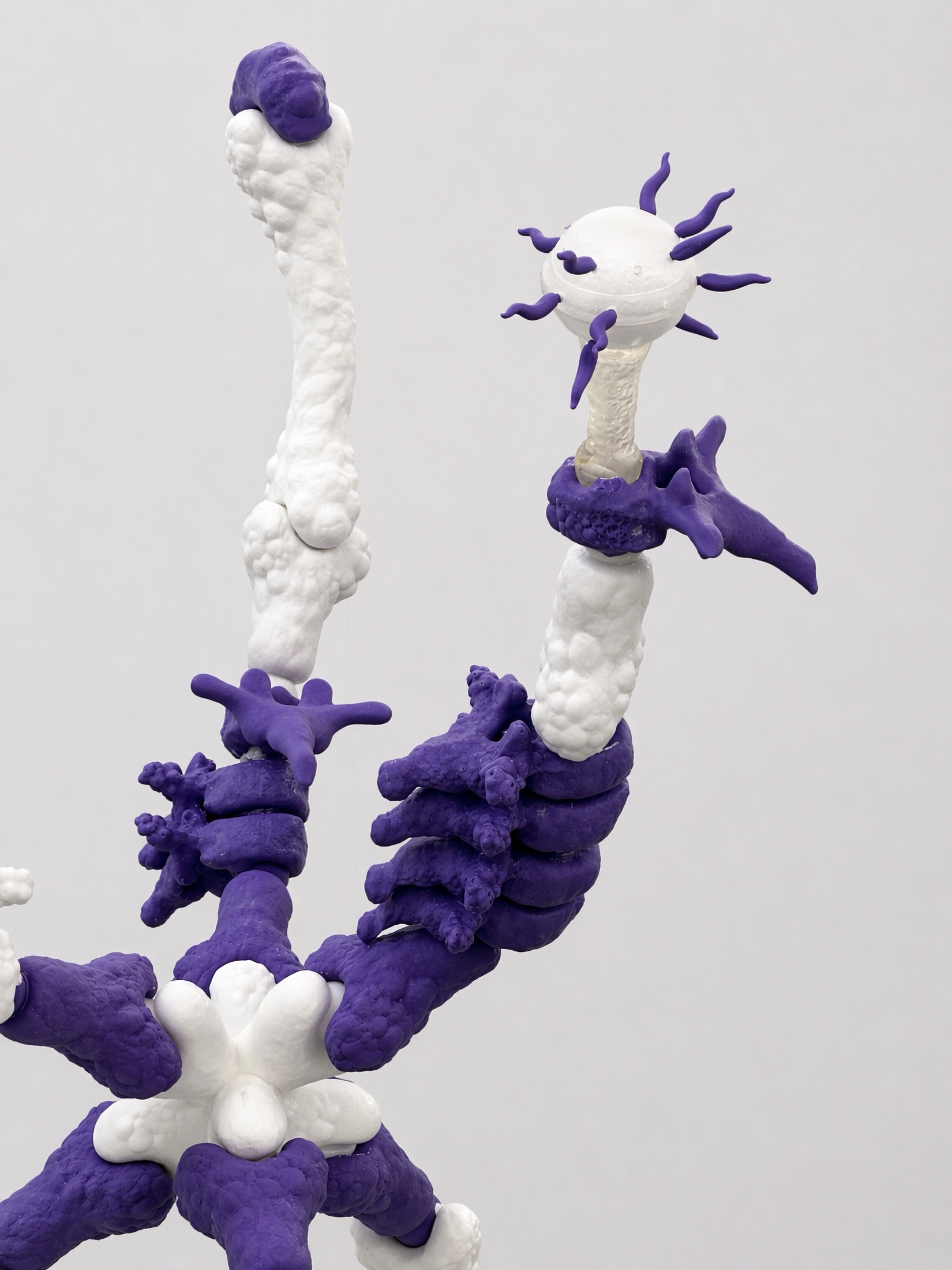
The smooth resin surfaces and repeated joints make the sculptures feel both clinical and handmade: like medical models, toys, ritual objects, and construction parts at once.
The system is precise enough to hold together, but loose enough to invite mistakes. A structure can stand, collapse, lean, hang, be carried, or be rebuilt into something that no longer resembles its previous version.


Reconstruction
Across the project, the skeleton is less a symbol of death than a building site. Rebone Organizm'os uses the language of bones to think about bodies after rupture: migration, displacement, memory, and identity appear here as things that must be constantly reattached.
Nothing is restored to an original state. Instead, the work proposes reconstruction as a living, unstable, and collective condition.
Temporary organism
The assembled figures often hover between tenderness and threat. Red organs sit inside black limbs, translucent parts behave like fragile membranes, and purple elements shift between infection, ornament, and growth.
The forms are not monsters in a closed narrative. They are provisional organisms, bodies rehearsing how to survive being incomplete.
Open future
Because the project is modular, it also remains unfinished by design. Each exhibition, workshop, or encounter can add another configuration to the archive without closing the work.
Rebone Organizm'os is not one sculpture multiplied into variants, but a living vocabulary for bodies that are assembled in public, disassembled without loss, and returned to circulation.

The work never settles
into one final form.
Moving image
Eight short records of the project in motion. Videos load only when selected, so they do not interrupt the page or capture scrolling on mobile.